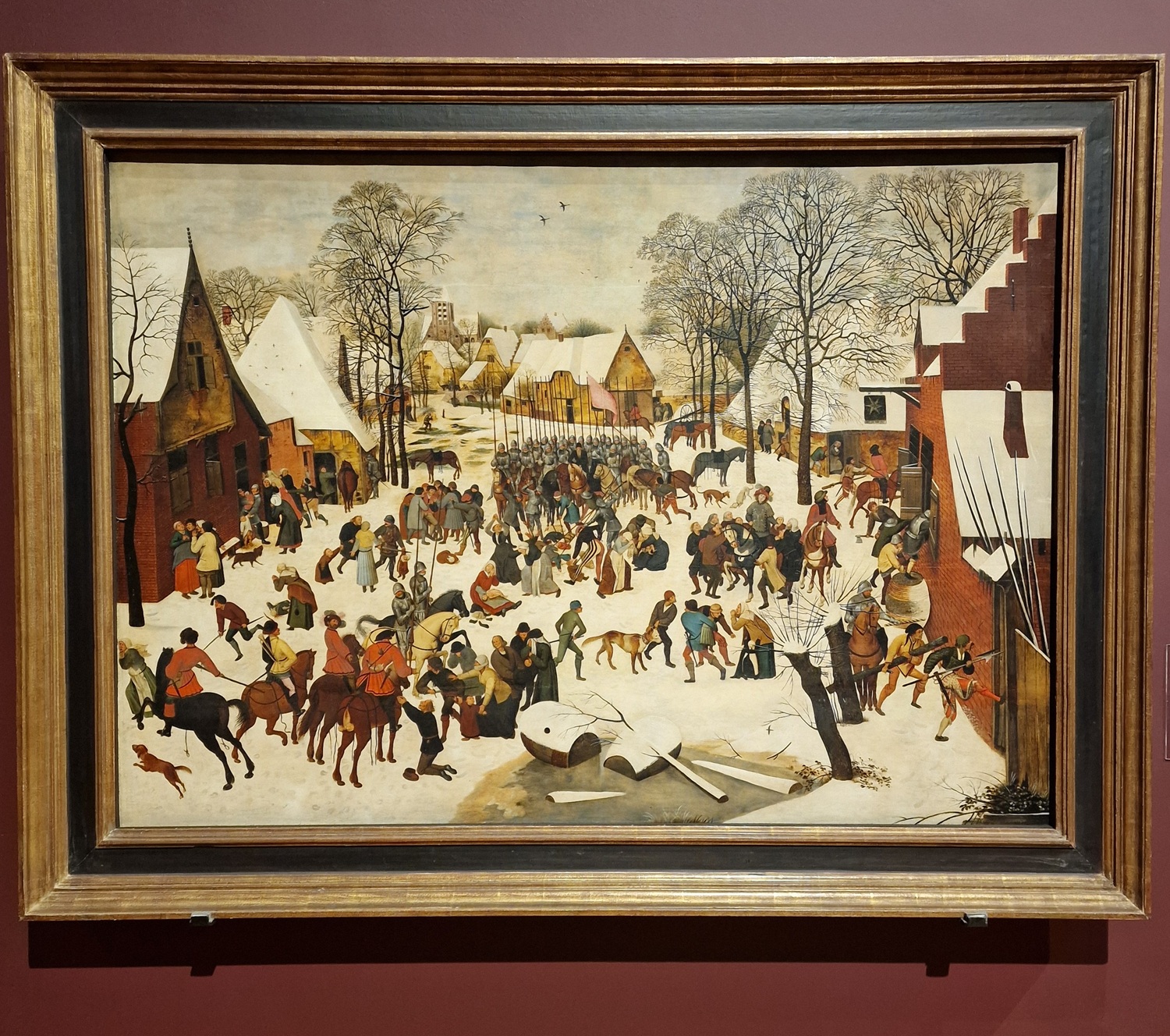
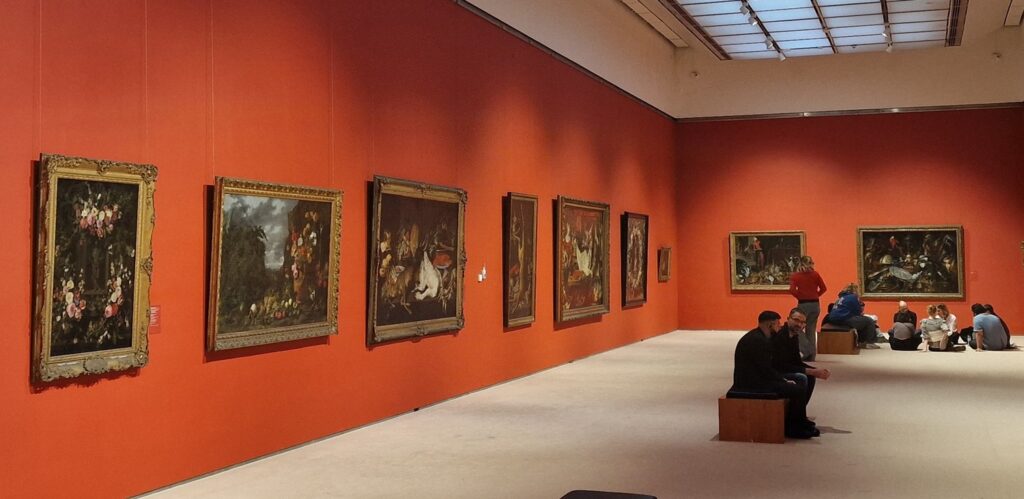
The Old Masters Museum, Brussels. Photo ©Jonathan Turton
But if you want me to really appreciate art like this, you’re going to need to give me a bit of help. Clearly every other visitor has a degree in art history, but not me. I need a nudge to know what to look out for. A hint as to why a 17th-century Dutch artist no one’s ever heard of deserves his (and it usually is a “his”) place in this sprawling collection. What’s that? Do I want an audio guide? No. No I do not. Because that gets in the way of my flâneuring. It controls the time I spend in each room. I’m sure it gives good insights, and for many people it might be excellent. I don’t need all the detail; I’d just like some.
And so it was that in the palatial setting of the Royal Museums of Fine Arts’ Old Masters, I stumbled around first the Dutch School rooms (peculiarly arranged by subject matter), and then the main Old Masters collection itself. There were some odd interludes. “Room 54”, as it’s both unimaginatively but also mysteriously called, is a collection of contemporary art; recent acquisitions to remind everyone that the RMFA spans all the eras, it’s just that the modern stuff is going through a massive overhaul. Saul Steinberg’s magnificent and massive 1950s murals were another interlude, a severely secular counterpoint to the equally massively magnificent Peter Paul Rubens’ altarpieces.
I enjoyed hopping from the altarpieces to Rubens’ 12 small oil sketches, showcasing the same dynamic brushwork that characterises PPR’s art.
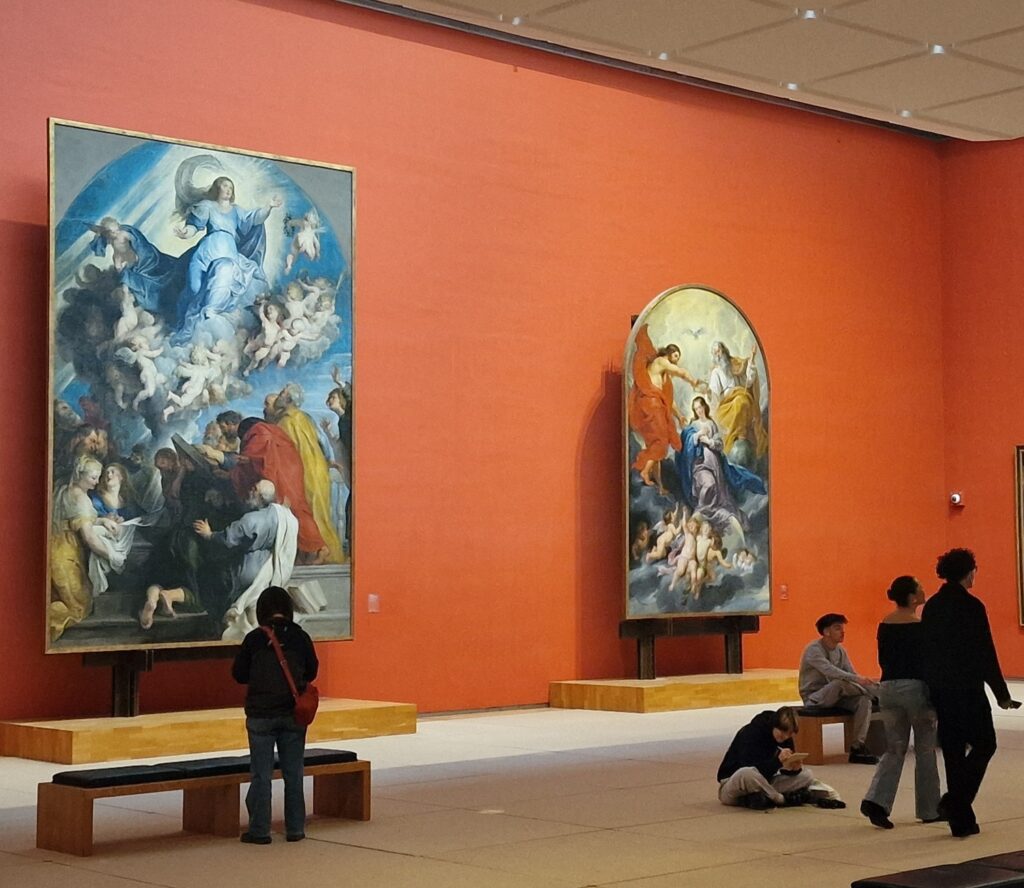
Peter Paul Rubens and workshop, The Assumption of the Virgin c.1615-16 (left) and The Coronation of the Virgin c.1625 (right). Photo ©Jonathan Turton
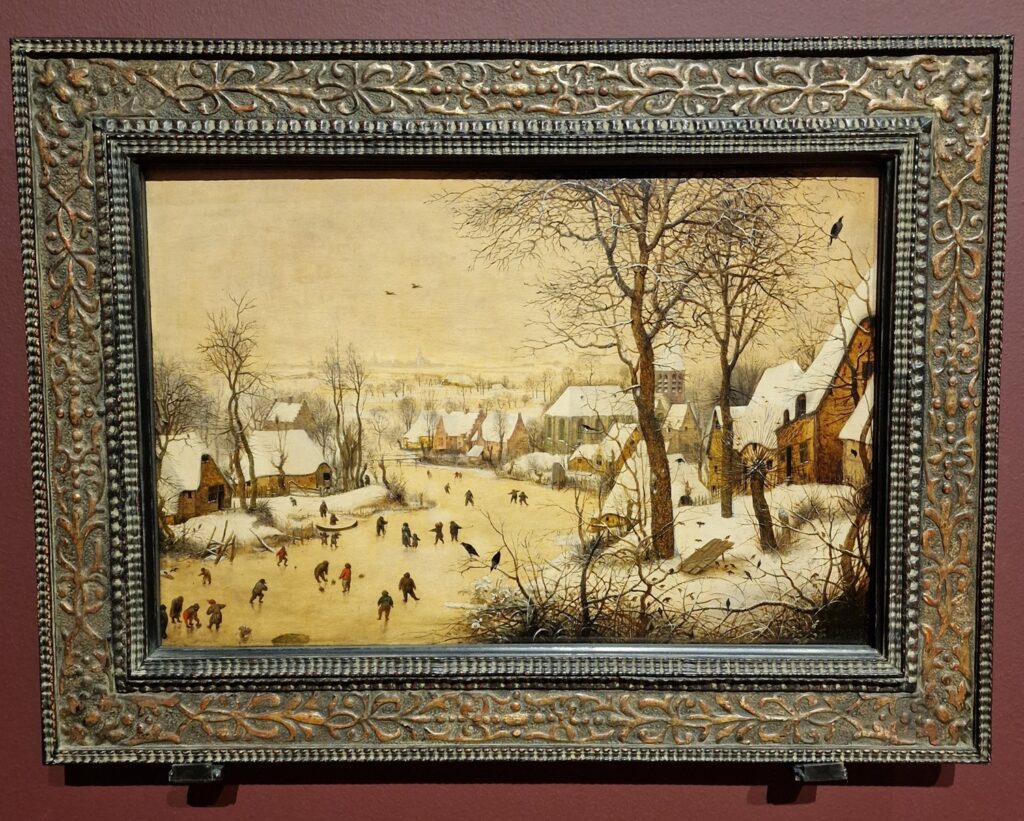
Pieter Bruegel the Elder, Winter Landscape with Bird Trap, 1565
There are a lot of big-name artists present, but – Bruegels aside – even the most celebrated works (Cranach’s Adam & Eve, David’s Death of Marat) aren’t given much if any additional interpretation. Only the little headphones icon at the bottom of the label suggests that there’s more to a painting than you might think.
There’s something Flemishly democratic about treating masterpieces and also-rans the same… but it’s a wee bit frustrating for the museum flâneur. Curators must have spent an age debating and then hanging select works from what is an enormous collection. Let me soak it in, but give me a little bit of help along the way. Otherwise, it’s just a lot of brown paintings.
Light up my life: 7/10